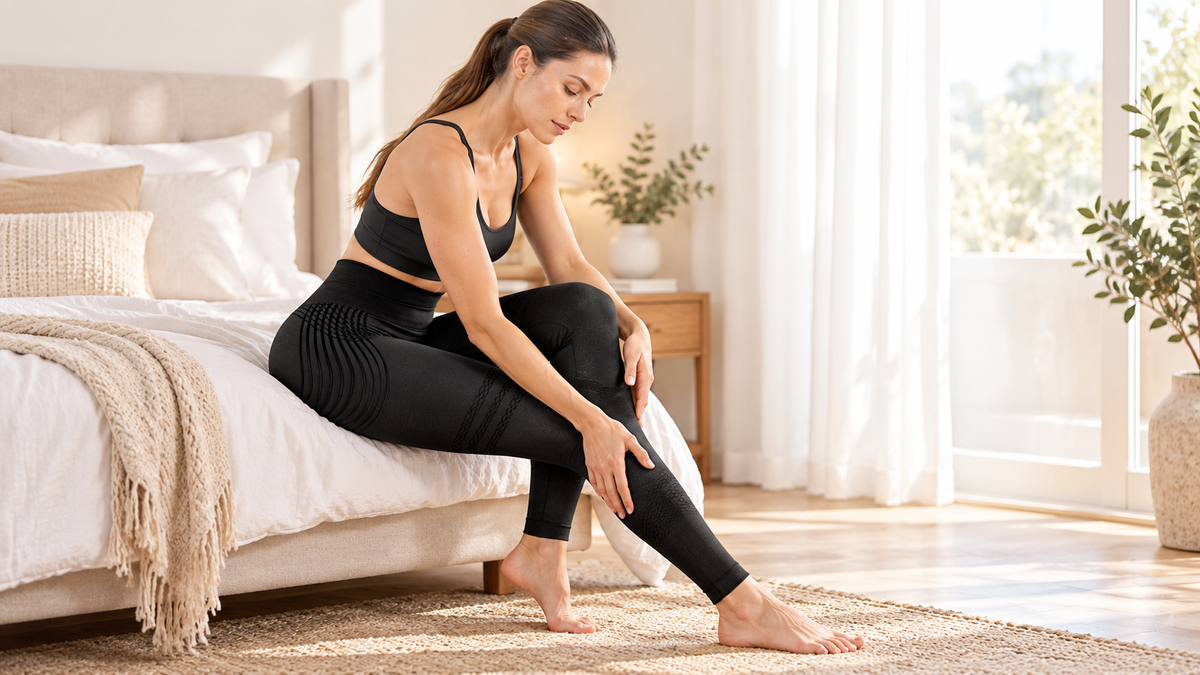
You get home, sit down, and your legs feel like they've been filled with sand. Your ankles look a little puffy, your calves ache, and all you want is to put your feet up. If that sounds familiar, you're far from alone — heavy, tired legs are one of the most common complaints among women who stand or sit for long hours.
Here's what's usually behind it, when it's worth seeing a doctor, and the simple daily habits that genuinely help.
What's actually happening in your legs
Your heart pumps blood down to your legs easily — gravity helps. Getting it back up is harder. That job falls mostly to your veins, which have tiny one-way valves, and to your calf muscles, which squeeze the veins every time you take a step. Researchers often call the calf the body's "second heart".
When you stand still or sit for hours, that calf pump barely works. Blood and fluid move more slowly and start to pool in the lower legs. The result is that familiar heavy, swollen, achy feeling by the end of the day.
The most common causes
- Long periods of standing or sitting — shop floors, offices, long drives and flights.
- Heat — warm weather makes veins widen, so fluid pools more easily. Many women notice heavy legs mostly in summer.
- Hormonal shifts — the days before a period, pregnancy, and hormonal contraception can all increase fluid retention.
- Not moving enough — less walking means a lazier calf pump.
- Salty meals and not drinking enough water — both encourage the body to hold on to fluid.
- Family history of vein problems — valve weakness tends to run in families.
When heavy legs need a doctor, not a legging
Most heavy-leg days are harmless. But please see a doctor promptly if you notice:
- Swelling, pain, warmth or redness in one leg only
- Sudden swelling with shortness of breath or chest pain — this is an emergency
- Swelling that doesn't go down overnight
- Visible, painful or bulging veins, skin discolouration or sores near the ankle
What genuinely helps
Move your calves often
Every hour, walk for a few minutes or do 20 calf raises. At a desk, point and flex your feet or roll your ankles. It sounds small, but it restarts the pump.
Raise your legs
Ten to fifteen minutes with your legs above hip level — on a cushion, or up against a wall — helps fluid drain back toward the body.
Cool, not hot
Finish your shower with a cool rinse on your legs, and avoid very hot baths on heavy-leg days.
Hydrate and ease off the salt
Counter-intuitive but true: drinking enough water helps your body let go of excess fluid.
Wear gentle compression
Light, graduated compression supports your veins from the outside and helps fluid keep moving instead of pooling. It's why nurses, flight attendants and people who stand all day swear by it.
Do compression leggings help with circulation?
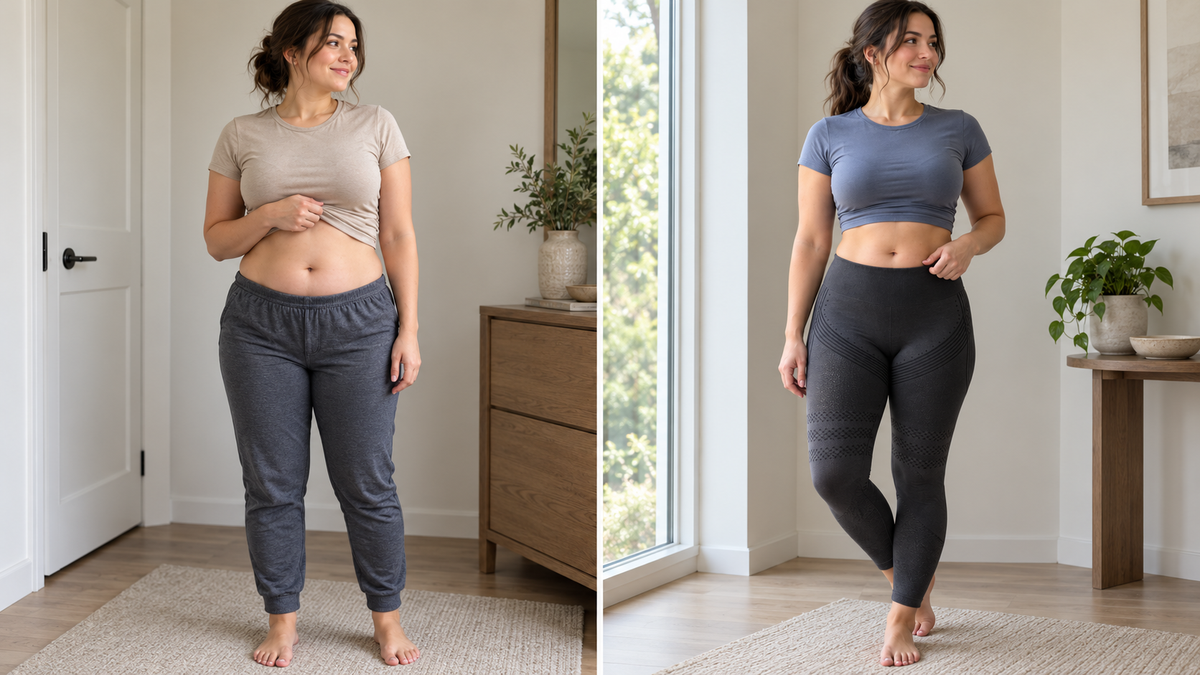
Graduated compression — firmer at the lower leg, softer higher up — is widely used to reduce the feeling of heaviness and swelling. A comfortable compression legging won't replace medical-grade stockings if your doctor has prescribed them, but for everyday tired legs it can make long days noticeably more comfortable. Many women find that textured knits, like our 3D sculpting leggings, add a pleasant massaging sensation with every step.
The key is fit: compression should feel like a firm hug, never painful, tingly or leaving deep marks. If it does, size up.
A simple daily routine for lighter legs
- Morning: put on your compression leggings before your legs have had time to swell.
- During the day: move every hour — a short walk, calf raises, or ankle circles.
- Lunch: a glass of water with every meal; go easy on very salty food.
- Evening: 10 minutes with your legs up the wall and a cool rinse in the shower.
Frequently asked questions
Why are my legs heavier in summer?
Heat widens your veins, so blood and fluid pool more easily. Cooling your legs and moving more on hot days makes a real difference.
Can I wear compression leggings all day?
Yes, if they fit well and feel comfortable. Take them off to sleep unless a doctor has advised otherwise.
Is it normal to have heavy legs before my period?
Very common. Hormonal changes increase fluid retention for a few days; the same habits above help.
This article is for general information and isn't medical advice. If you have ongoing swelling, pain or a known vein or heart condition, talk to your doctor before using compression garments.