Cellulite affects roughly 8 to 9 out of 10 women at some point. It isn't a disease, it isn't a sign you're "unhealthy", and it isn't something you did wrong. But if the dimpling on your thighs bothers you, it's fair to want to know what actually makes a difference — and what's just marketing.
This guide sorts the most common options into three honest groups: what can change the skin and tissue over time, what improves how your thighs look in the short term, and what you can safely skip.
Why cellulite shows up on the thighs first
Under the skin, fat sits in small chambers separated by vertical bands of connective tissue called septae. In women, those bands tend to run straight up and down, like the posts of a fence. When the fat chambers swell or the skin above them loses firmness, the fat pushes upward between the bands while the bands pull down — and you get that orange-peel texture.
The thighs and buttocks are where women naturally store more fat, where circulation tends to be slower, and where the skin is under constant movement. That combination is why cellulite usually appears there before anywhere else. Hormones, genetics, age-related thinning of the skin and fluid retention all make it more or less visible from day to day.
What can change the tissue over time
1. Building muscle in your legs and glutes
Stronger, fuller muscle underneath gives the skin a smoother surface to sit on. Squats, lunges, hip thrusts, step-ups and glute bridges two to three times a week are among the most reliable long-term changes you can make. It takes months, not days — but it's also the change that lasts.
2. Keeping your weight stable
Repeated gain-and-loss cycles stretch the connective tissue and make dimpling more visible. A steady, sustainable routine usually beats an aggressive diet followed by a rebound.
3. Supporting your skin
Firmer, thicker skin hides what's underneath better. Daily sun protection on exposed legs, not smoking, enough protein, and topical retinol used consistently over several months can all help skin quality over time.
4. In-clinic treatments
Some dermatologist-led procedures target the connective bands directly. They cost more and results vary, so if cellulite genuinely affects your confidence, a consultation with a qualified dermatologist is the place to get a personalised answer.
What improves the look in the short term
Compression and textured leggings
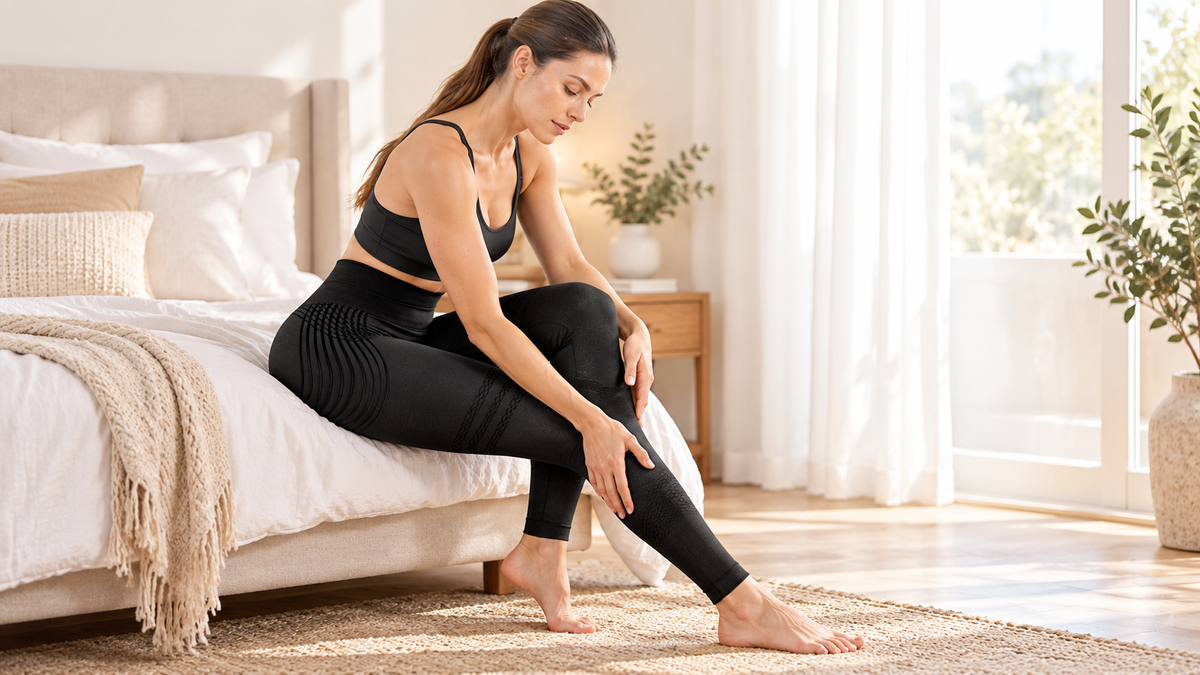
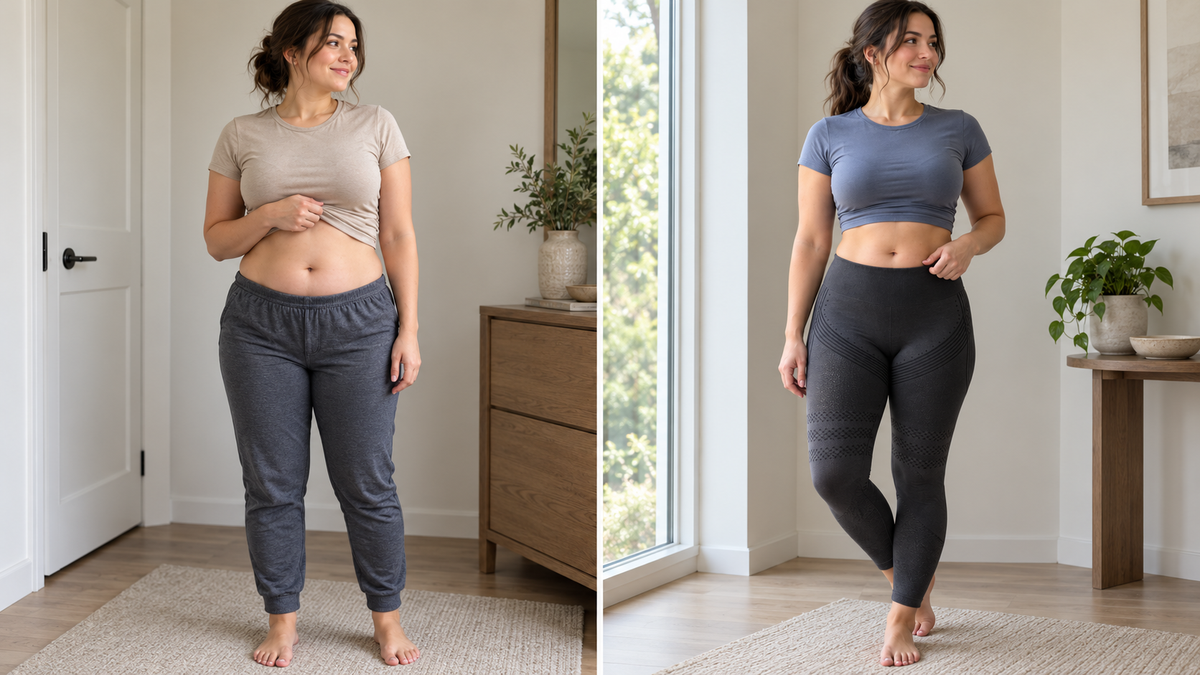
Well-fitted compression evens out the surface of the skin while you wear it and can help with the feeling of puffy, tired legs by encouraging fluid to move rather than pool. Textured knits add a gentle massaging effect as you walk. Think of them as a visual smoothing and comfort tool: your legs look sleeker and feel lighter while they're on — they don't rebuild tissue on their own. That's exactly why we designed our 3D sculpting leggings to be comfortable enough to wear all day, alongside the long-term habits above.
Dry brushing and massage
Brushing or massaging the thighs temporarily increases blood flow and can make skin look smoother for a few hours. It feels good and it's cheap — just don't expect permanent change.
Staying hydrated and reducing salt
Fluid retention makes cellulite look worse. Drinking enough water and watching very salty meals can visibly reduce puffiness, especially toward the end of the day.
What you can skip
- "Detox" teas and cleanses — they mostly act as diuretics or laxatives. Any change you see is water, and it comes back.
- Miracle creams promising to "melt" cellulite — caffeine creams can tighten the skin slightly for a few hours; nothing you rub on will dissolve fat.
- Extreme calorie cutting — you'll often lose muscle as well as fat, which can make texture look worse.
A realistic 12-week plan
- Weeks 1–4: Two to three lower-body strength sessions a week. Walk daily. Drink water consistently. Wear compression on long standing or sitting days.
- Weeks 5–8: Add weight or reps to your exercises. Start a retinol body lotion a few nights a week. Keep your meals protein-rich.
- Weeks 9–12: Keep the routine going and take photos in the same light as week 1. Most women notice firmer, smoother-looking thighs by now — and the habits keep working after that.
Frequently asked questions
Can cellulite go away completely?
For most women, no — and that's normal. The goal is to make it less visible and to feel good in your skin, not to erase something that nearly every woman has.
Does losing weight get rid of cellulite?
It can help if you have more fat to lose, but slim women get cellulite too. Muscle tone and skin quality matter just as much.
How fast will I see results?
Compression and massage change the look the same day. Strength training and skincare take roughly 8 to 12 weeks to show.
This article is for general information and isn't medical advice. If you notice sudden swelling, pain, skin changes or one leg that looks very different from the other, speak to a doctor.